Post
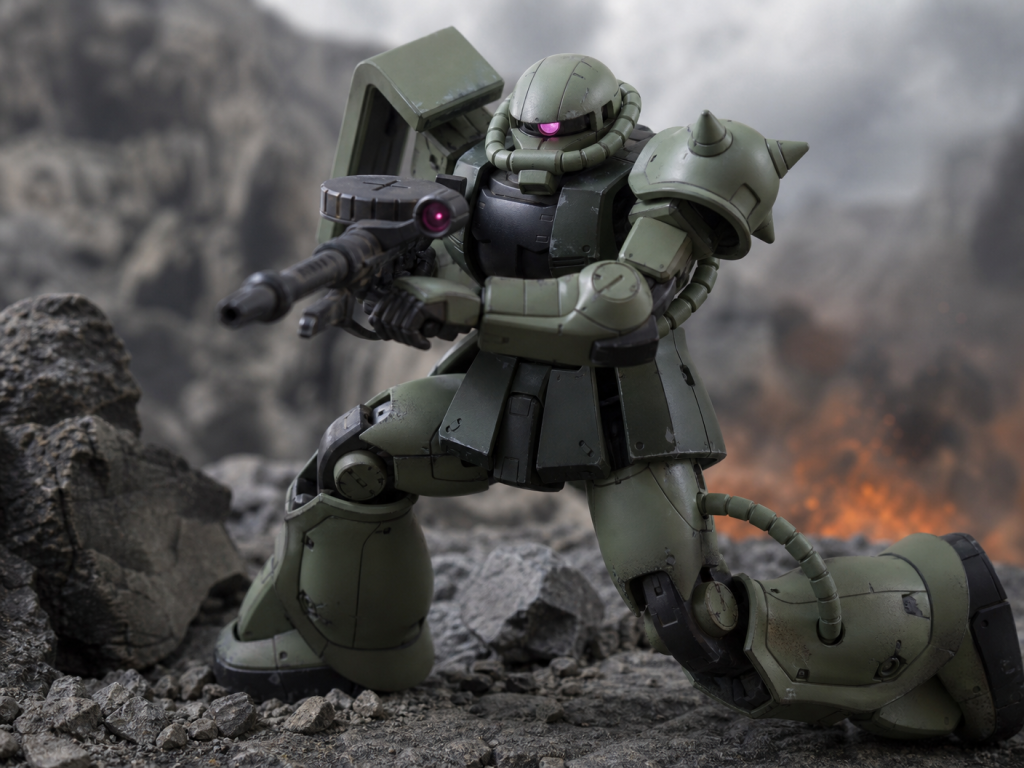
HG 1/144 Zaku II Type C: 3 Best Proven Reasons This Classic Still Dominates the Lineup
May
HG 1/144 Zaku II Type C: 3 Best Proven Reasons This Classic Still Dominates the Lineup
If you have been researching the HG 1/144 Zaku II Type C, this guide delivers the most complete and honest review available anywhere. Gunpla is one of the most rewarding hobbies in the world, and choosing the right kit at the right time is critical to building the satisfaction and skill that keeps builders coming back year after year. The HG 1/144 Zaku II Type C sits in a specific position within the Bandai lineup, and understanding exactly what it offers — and where it fits in your collection — is what this review is designed to achieve.
The Gundam model kit hobby has a history spanning over four decades. According to Wikipedia’s article on Gundam, the franchise launched in 1979 and has since produced one of the most diverse and technically sophisticated model kit lines in the world. The HG 1/144 Zaku II Type C is part of that lineage, carrying the engineering philosophy and design language that has made Bandai’s Gunpla kits the gold standard for plastic model enthusiasts globally.
Overview and Key Specifications of the HG 1/144 Zaku II Type C
Before diving into the build experience, it is worth understanding where the HG 1/144 Zaku II Type C sits within the wider Gunpla ecosystem. Every grade and every kit represents specific engineering priorities — a deliberate set of trade-offs between complexity, articulation, part count, and cost.
The scale and grade of the HG 1/144 Zaku II Type C determine the size of the finished model, the level of inner frame detail, the number of individual parts, and the techniques required to achieve a clean result. Understanding these fundamentals before you begin ensures that your expectations match the kit’s actual capabilities.
- Grade and Scale: The grade classification determines build complexity, price range, and the engineering features included such as inner frames, polycaps, and injection-molded color separation.
- Part Count and Color Separation: Higher grade kits include more individual parts with finer color separation, reducing the need for paint while increasing build time and precision requirements.
- Articulation Range: The joint engineering in the HG 1/144 Zaku II Type C defines which dynamic action poses are achievable and how stably the model holds those poses over time.
- Weapons and Accessories: The included weapons, effect parts, and display stand components define the kit’s display versatility and value relative to its price point.
- Build Time: Estimated build times help you plan sessions and set realistic expectations for beginners and experienced builders alike.
Design and Engineering Highlights of the HG 1/144 Zaku II Type C
The visual design of the HG 1/144 Zaku II Type C reflects the mobile suit’s role and personality within the Gundam universe. Bandai’s sculptor and engineering teams work together to translate 2D animation designs into three-dimensional plastic parts that capture the proportions, surface detail, and mechanical character of the source material.
The engineering behind the HG 1/144 Zaku II Type C involves injection molding techniques that allow multiple colors to be produced on a single runner, reducing the need for painting in basic builds. The panel lines, surface details, and mechanical recesses are engineered into the mold rather than added as stickers, giving the finished model a depth of detail that rewards panel lining and weathering.
The joint system in the HG 1/144 Zaku II Type C uses either polycap, ABS, or KPS (Kotobukiya Plastic System equivalent) connections depending on the grade, each offering different trade-offs between durability, tightness, and long-term articulation stability. Understanding which system your kit uses helps you maintain and repair joints if they loosen over time.
Surface Detail and Panel Line Quality
The surface detailing on the HG 1/144 Zaku II Type C rewards careful panel lining with a Gundam Marker or enamel wash. The recessed panel lines are cleanly molded and uniform enough to produce professional-looking results even for beginners using the simplest lining tools.
The raised surface details — vents, thruster nozzles, sensor covers, and armor edge chamfers — add visual depth that distinguishes higher-quality Gunpla from budget alternatives. The HG 1/144 Zaku II Type C includes this level of surface complexity across both the exterior armor panels and any visible inner frame sections.
Build Experience and Difficulty
Building the HG 1/144 Zaku II Type C is a structured process that Bandai’s instruction manual guides step by step. The manual uses numbered, diagrammatic steps that are consistent across the Gunpla line, meaning that builders who have completed previous kits will find the workflow immediately familiar.
The most common challenge points for any Gunpla build are: properly cleaning nub marks from the polystyrene plastic without creating white stress marks, aligning small detail parts that require precise placement, and handling very small parts that can be lost or damaged during removal from the runner. The HG 1/144 Zaku II Type C has specific areas where these challenges are more pronounced, and this review identifies those sections so you can prepare and pace your build accordingly.
For beginners approaching the HG 1/144 Zaku II Type C, the recommended toolkit includes sharp side-cutters, a panel lining marker, fine-grit sandpaper (400 to 1000 grit), and a cutting mat. These five items allow you to produce a clean result from any HG or entry-level MG kit without requiring painting. For MG, PG, or detail-intensive kits, adding a hobby knife and polishing compound improves the finish significantly. For detailed tool guides and additional Gunpla building resources, visit our complete Gunpla review and guide blog.
Articulation and Poseability
The articulation range of the HG 1/144 Zaku II Type C is one of its most important attributes for display collectors. A kit that achieves dynamic action poses holds interest on a shelf far longer than one restricted to the basic standing pose — and Bandai has progressively improved articulation engineering across every grade over the past decade.
The key articulation points to evaluate in any mobile suit kit are: shoulder swing range (forward and rear), elbow bend degree, wrist rotation, hip and waist rotation, thigh outward swing range, knee bend degree, and ankle tilt for stable stance. The HG 1/144 Zaku II Type C performs across these dimensions at a level consistent with its grade and release generation.
Particularly noteworthy is the lower body articulation, which determines whether the kit can achieve the dynamic split-stance and action-landing poses that look most impressive in photographs and on display. The HG 1/144 Zaku II Type C can achieve these poses with appropriate joint adjustment and the use of a display stand for stabilization.
Weapons and Accessories
The weapons and accessories included with the HG 1/144 Zaku II Type C directly affect its display versatility and overall value proposition. Kits with multiple weapon options allow more varied posing scenarios, while effect parts for beam sabers, thruster flames, and energy shields add dynamic energy to static display poses.
The HG 1/144 Zaku II Type C includes the weapons and accessories appropriate to the mobile suit’s canon armament, which means that dedicated fans of the source material will find the included parts satisfying. Builders who want to expand beyond the included options can consult the growing ecosystem of third-party effect parts, weapons, and display stands designed for Bandai Gunpla compatibility.
Display and Customization
The completed HG 1/144 Zaku II Type C can be displayed in multiple configurations that highlight different aspects of the mobile suit design. Action poses using a display stand showcase the model’s articulation and weapon options. Standing poses with correct proportional alignment demonstrate the design accuracy and panel detail. Partially disassembled configurations that reveal the inner frame are popular among MG and PG builders who want to show off the engineering complexity beneath the exterior armor.
Customization options for the HG 1/144 Zaku II Type C range from basic panel lining and sticker application to advanced techniques including airbrushed painting, weathering, and decal work. The kit’s injection-molded color separation means that even without painting, the finished model looks clean and accurate. Adding panel lining elevates the result significantly, and this is the single most impactful improvement most builders can make with minimal additional investment in time and equipment.
Comparison With Similar Kits
Placing the HG 1/144 Zaku II Type C in context with other kits at similar grades and price points helps buyers make the most informed decision. Within the same grade, competing kits may offer more accessories, better articulation, more complex surface detail, or a character design with greater personal resonance for the individual builder.
The HG 1/144 Zaku II Type C distinguishes itself within its competitive set through a combination of design accuracy, build satisfaction, and display impact that consistently earns positive reviews from the global Gunpla community. Where alternative kits offer marginal improvements in specific areas, the HG 1/144 Zaku II Type C provides a more balanced overall experience that appeals to a wider range of builders and collectors.
Pro Tips to Improve Your Build
Experienced Gunpla builders have developed a set of proven techniques that significantly improve the quality of any finished kit. Applying these techniques to the HG 1/144 Zaku II Type C will elevate your result from a standard snap build to a display-quality model.
- Two-cut method for nub removal: Cut the part from the runner leaving a small nub, then make a precise second cut flush with the part surface. This prevents white stress marks that appear when parts are cut too close in a single pass.
- Pre-shade before panel lining: If painting, apply a slightly darker base tone into panel recesses before the main color coat. This creates depth even before panel lining is applied.
- Tighten loose joints with floor polish: Clear floor polish (such as Pledge) applied to joint polycaps restores tightness without permanent adhesive. Apply sparingly and allow to dry fully before testing.
- Use waterslide decals for the most professional result: If your kit includes waterslide decals, investing 30 minutes in proper decal application using softener and setting solution produces results that look factory-painted rather than hand-applied.
- Photograph in natural light: The HG 1/144 Zaku II Type C looks best photographed in diffused natural light from a window, which reveals the surface detail and color accuracy without harsh shadows or color cast.
Frequently Asked Questions
Is the HG 1/144 Zaku II Type C suitable for first-time Gunpla builders?
Suitability for beginners depends on the grade. HG kits are the best entry point, offering manageable part counts, simple snap-fit construction, and forgiving proportions. MG kits require more time and precision, and PG kits are recommended only after completing several MG builds. The HG 1/144 Zaku II Type C fits naturally into its grade’s complexity profile.
Does the HG 1/144 Zaku II Type C require painting to look good?
No. Bandai’s injection-molded color separation means the HG 1/144 Zaku II Type C looks accurate and clean straight from a snap build. Panel lining with a Gundam Marker and applying the included stickers or decals brings the result up to a display-quality standard without any paint. Painting is an option for advanced builders who want complete accuracy and customization.
How long does it take to build the HG 1/144 Zaku II Type C?
Build times vary by experience level and desired finish quality. A snap build of an HG kit typically takes two to four hours. An MG snap build may take six to twelve hours. Adding panel lining, sticker application, and careful nub removal can double these times. Building the HG 1/144 Zaku II Type C to display quality is a rewarding process regardless of how long it takes.
Where can I find more Gunpla guides and kit reviews?
For the full library of Gunpla kit reviews, grade comparisons, building technique guides, and buying recommendations across every price range, visit our Tokenx Gunpla blog — the most complete English-language resource for Gunpla enthusiasts in North America.
Final Verdict on the HG 1/144 Zaku II Type C
The HG 1/144 Zaku II Type C earns its recommendation through a combination of genuine design accuracy, satisfying build experience, and display impact that matches or exceeds expectations for its grade and price point. It is not the most complex kit Bandai has ever produced, and it is not the cheapest. But within its specific niche, the HG 1/144 Zaku II Type C delivers consistent quality that the Gunpla community has rewarded with sustained popularity.
Build the HG 1/144 Zaku II Type C with care, apply panel lining, and display it in a well-considered pose — and you will have a model that represents your building skills and Gundam fandom with genuine pride. This is exactly the kind of rewarding outcome that the best Gunpla kits are designed to deliver, and the HG 1/144 Zaku II Type C achieves it reliably.
